Ancient Wisdom for Modern Minds: How Practices Like Yoga and Tai Chi Nurture Our Nervous Systems
As the days become longer, you may feel inspired to get more active. Yet it can just as easily begin to feel like another thing to do.
You might recognise the struggle to find any real sense of motivation in the idea of moving more—or even to believe that movement can make a meaningful difference to how you feel in your mind.
Perhaps it can be helpful to look back through time, and consider what earlier generations understood about movement. Long before we had words like self-care or nervous system regulation, people were developing ways of moving, breathing, and simply being present within themselves.
If we take practices such as yoga and tai chi, these were never about performance or competition. They were about balance, awareness, and creating the conditions for the body to feel safe.
In many ways, these ancient forms of movement offer a gentle reminder that wellbeing isn’t something we have to strive for—it’s something we can reconnect with. Often, it begins by slowing down enough to notice.
I think of these practices as a form of ancient wisdom. The origins of yoga are thought to date back over 5,000 years, while the philosophy behind tai chi is believed to be more than 3,000 years old. Martial arts traditions can be traced back hundreds of years.
Calling them “ancient” feels appropriate.
They remind us that humans have been engaging in these forms of movement for centuries. There is something reassuring in that continuity. It suggests that we don’t always need to search for something new—we can often find support in what has quietly endured.
Looking Back into History
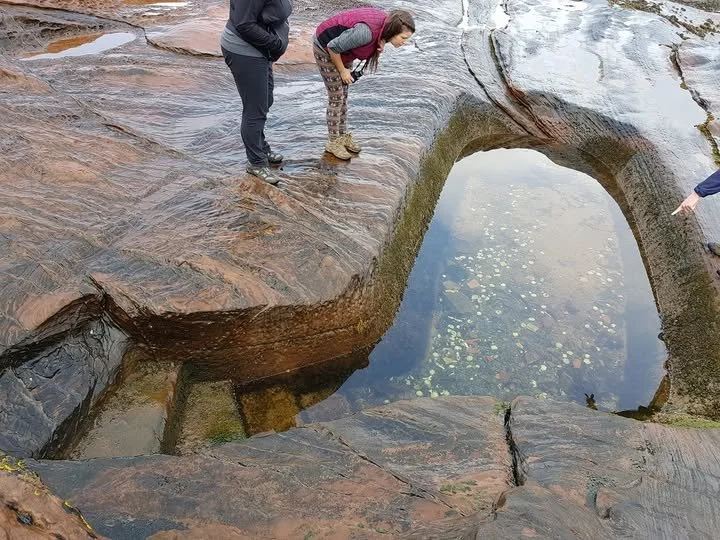
Take “The Doctor’s Bath” on the Isle of Arran, for example. Dr McCredy had this bath carved into the sandstone shore at Corrie in 1835, using seawater as a form of treatment for his patients.
Now, in 2026, sea swimming and cold-water dipping are becoming increasingly popular along the UK coastline. Here in Fife, many coastal towns and villages have groups who meet regularly for a quick dip, often followed by time in one of the pop-up saunas dotted along the shore. It can feel like a newly discovered wellbeing trend.
And yet, it isn’t new at all.
Knowing that a doctor was using seawater therapeutically almost 200 years ago offers a different perspective. While modern practitioners may occasionally suggest nature-based activities as part of a broader approach to wellbeing, it’s unlikely that sea dipping appears frequently on a prescription.
Still, the instinct behind it remains the same.
These practices have been passed down through generations, often quietly. They don’t need to loudly promote their benefits. Instead, they continue because people experience their value for themselves. There is something steady and trustworthy in that.
How does this influence my work?
When I begin working with a new client, I explore whether movement is part of their life. If it isn’t, I gently encourage them to consider introducing it in a way that feels manageable.
As humans, we can sometimes forget that we are also animals—beings that evolved through movement. It is through movement that the connection between mind and body begins to return.
For those experiencing trauma or poor mental health, this connection can become disrupted. When the mind and body feel disconnected, it can significantly affect how we experience ourselves in body and mind and the world around us.
Focusing on breathing and activity
Practices such as yoga and tai chi place a strong emphasis on breath and internal awareness. This is central to their impact.
Slow, deep breathing plays an important role in regulating the nervous system. When we move into a state of alert or threat, our breathing often becomes shallow and rapid. This can intensify feelings of anxiety or panic.
By intentionally slowing the breath—particularly the exhale—we begin to signal safety to the body. Over time, this can help reduce that heightened state of alertness.
Try this for yourself
Place a finger gently under your jaw and see if you can find your pulse.
Now try the following:
Breathe in for a count of 4
Hold for a count of 5
Breathe out slowly for a count of 6
Repeat this three times.
As you do, you may begin to notice your pulse slowing, particularly on the exhale. This reflects how the body responds to slower breathing, showing us that it is often in the out-breath that the nervous system begins to settle.
A Gentle, Ancient Challenge
So I leave you with a gentle challenge: to take a moment to reflect on your own life and how much you move within it.
If you tend to focus on high-impact exercise, perhaps there is something to be gained from exploring slower, more mindful movement.
If your movement is already slower and more contained, such as yoga or Pilates, you might consider introducing something more energising, like cycling or running.
And if movement isn’t really part of your life at the moment, you might begin with something small. Practices like tai chi can be easy to follow, with short, accessible sessions available online. Starting at home, in your own time, can be enough.
When I use the word challenge, I mean only this: to gently challenge yourself. There is no need to compare yourself to others or measure what you “should” be doing. That often takes us further away from what we need.
Instead, you might simply begin to explore what it feels like to move a little more, or a little differently, and to notice what changes.
Sometimes, it is through these small, consistent shifts that we begin to reconnect—with our bodies, our breath, and a quieter sense of wellbeing that has been there all along.